Getting started with digital marketing can feel like drowning in jargon — SEO, PPC, funnels, CTR, retargeting — before you’ve even figured out where to begin. If you’re a genuine beginner, this roadmap skips the overwhelm and focuses on a realistic starting sequence.
Where Should a Beginner Start With Digital Marketing?
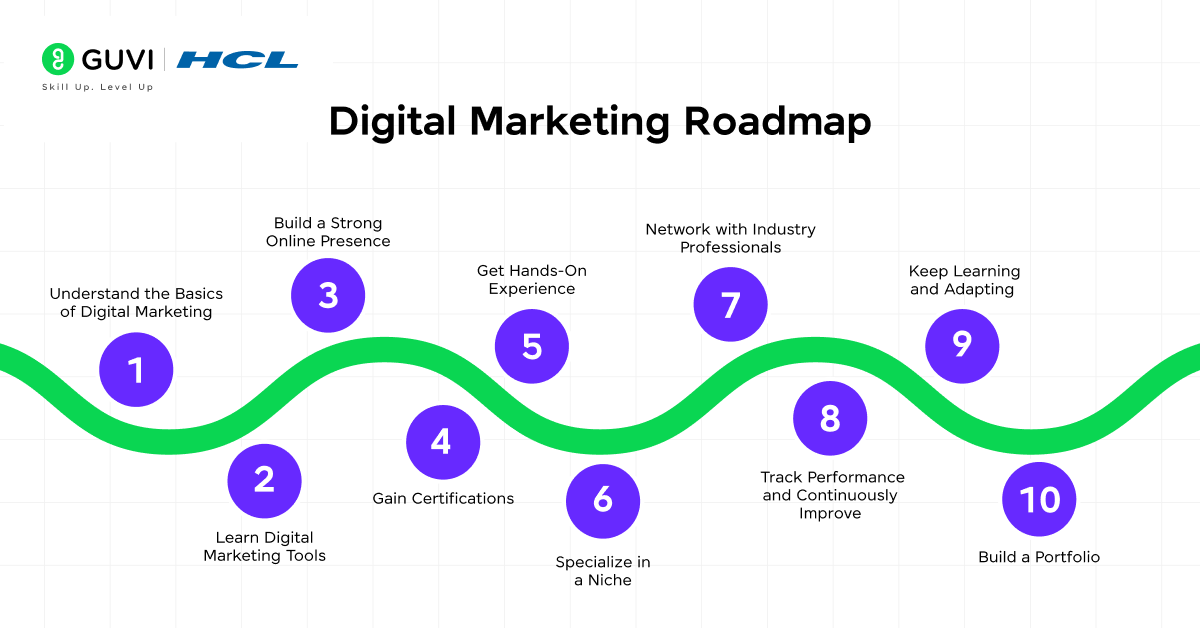
Beginners learning digital marketing should start with understanding their target audience, then build basic skills in one channel (social media or SEO) before expanding into paid advertising or more advanced tactics.
1. Understand Your Audience First
Before touching any tool or platform, get clear on who you’re actually trying to reach — their age, interests, problems, and where they spend time online. Every other decision depends on this.
2. Learn One Channel Deeply Before Spreading Out
Trying to master SEO, social media, email, and paid ads simultaneously as a beginner usually leads to shallow understanding of all of them. Pick one, get genuinely competent, then expand.
3. Start With Organic Social Media
Picture a beginner marketer starting with a small local business’s Instagram account. No ad budget, just consistent, genuine posting and engagement. Within a few months, that consistency alone built a loyal, engaged following — proof that budget isn’t the only path to results.
4. Get Basic SEO Fundamentals Down
- Understand keyword research basics
- Learn how on-page SEO elements (titles, headers, meta descriptions) work
- Understand the difference between organic and paid search results
[link to related guide about SEO versus social media marketing here]
5. Learn Basic Analytics Before Anything Else
Understanding tools like Google Analytics or platform-native insights is crucial — without this, you’re making decisions based on guesswork rather than actual data.
6. Experiment With Small Paid Campaigns
Once organic basics feel comfortable, small, low-budget paid campaigns (even ₹500-1000) teach you targeting, ad copy, and budget management in a low-risk way.
7. Understand Email Marketing Basics
Email remains one of the highest-ROI digital marketing channels, and beginners often overlook it in favor of flashier social media tactics.
[link to related guide about marketing strategy for small business here]
8. Follow Real Case Studies, Not Just Theory
Reading case studies of actual campaigns — what worked, what didn’t, and why — teaches practical lessons that generic “10 tips” articles rarely capture.
9. Accept That Trial and Error Is Part of the Process
Nobody gets digital marketing right immediately. Expect some campaigns to underperform, and treat that as useful data rather than failure.
FAQs
Q: How long does it take to learn digital marketing as a complete beginner? Basic competency in one channel typically takes 2-3 months of consistent practice, while broader proficiency across multiple channels takes closer to a year.
Q: Do I need to learn coding to do digital marketing? No — most digital marketing skills (content, social media, basic SEO, paid ads) don’t require coding knowledge at all.
Q: What’s the best free resource to learn digital marketing basics? Platform-specific resources (Google’s own guides, Meta’s Blueprint courses) tend to be reliable, free starting points for foundational knowledge.
Q: Is digital marketing a good career path for beginners in 2026? Yes, demand remains strong, and it’s one of the more accessible fields to break into without a formal degree, given genuine skill and demonstrated results.
Q: Should beginners focus on organic or paid digital marketing first? Organic first is generally recommended — it builds foundational understanding of audience and messaging before adding the complexity of budget management.
Conclusion
Digital marketing for beginners doesn’t need to be overwhelming if you focus on one channel at a time, build genuine understanding of your audience, and treat early mistakes as useful learning rather than failure. Start small, stay consistent, and let real results guide your next steps forward.