Raising money is one of those things every founder thinks about way earlier than they should. I get messages constantly from people who haven’t even validated their idea yet, asking how to pitch investors. Let’s slow down a bit.
Startup funding in India has changed a lot over the past few years, and the founders getting funded today aren’t necessarily the ones with the flashiest decks — they’re the ones who understand exactly what stage they’re at and what investors expect from that stage.
What’s the Realistic Path to Startup Funding in India?
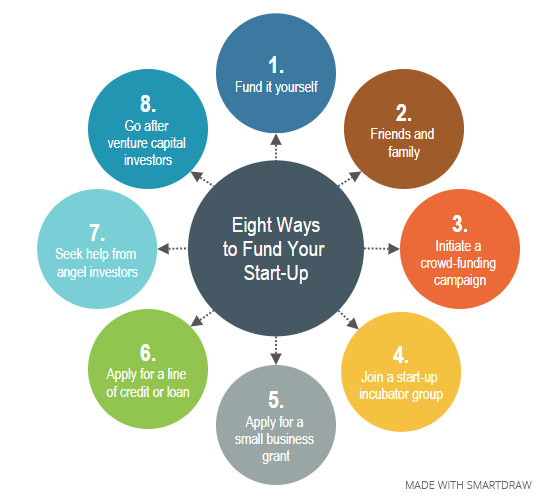
Most founders raising startup funding in India move through a predictable sequence: personal savings or friends-and-family money, then angel investors, then seed-stage VCs, and only later, larger institutional rounds. Skipping stages rarely works.
1. Start With Bootstrapping, Even Briefly
Before chasing outside money, most successful founders put in some of their own capital first. It signals commitment, and honestly, it forces early discipline that’s hard to fake otherwise.
2. Understand the Funding Stages
- Pre-seed: Idea stage, usually personal or friends-and-family money
- Seed: Early traction, angel investors or seed funds
- Series A: Proven business model, institutional VCs
- Series B+: Scaling an already-working model
Don’t pitch a Series A story if you’re still pre-seed. Investors notice immediately.
3. Build Traction Before You Pitch
Investors fund evidence, not ideas. Even a small number of paying customers, a working waitlist, or consistent month-over-month growth (even modest growth) matters more than a polished slide deck.
Picture two founders pitching identical apps. One has 50 paying users growing 15% monthly. The other has zero users but a beautiful deck. The first founder gets funded almost every time.
4. Know Your Numbers Cold
Be ready to answer, without hesitation:
- Monthly burn rate
- Runway remaining
- Customer acquisition cost
- Unit economics (do you make money per customer, or lose it?)
If you fumble these, it’s an instant red flag for any serious investor.
5. Target the Right Investors, Not Just Any Investor
A lot of founders waste months pitching investors who don’t even invest in their sector or stage. Research first. Platforms like AngelList India, LetsVenture, and sector-specific angel networks are a good starting point.
6. Prepare a Deck That Answers Real Questions
Your deck should cover:
- Problem and why it matters now
- Your solution and why you specifically can build it
- Market size (realistic, not inflated)
- Traction so far
- Business model and unit economics
- The ask — how much, and what it’s for
7. Understand Term Sheets Before Signing Anything
Don’t sign anything without understanding valuation, equity dilution, and investor rights like board seats or liquidation preference. Get a lawyer to review even a “simple” term sheet.
[link to related guide about corporate governance for startups here]
8. Consider Alternatives to VC Funding
Venture capital isn’t the only path. Government schemes like Startup India Seed Fund, revenue-based financing, or even strategic partnerships can fund growth without giving up large equity chunks.
9. Build Relationships Before You Need Money
The best fundraises often start with relationships built months in advance — not cold outreach the week you run out of cash. Start talking to investors even before you need to raise.
[link to related guide about common startup mistakes to avoid here]
FAQs
Q: How much equity should a startup give away in the first round? Typically 10-20% in a seed round, though this varies based on valuation and how much capital you actually need.
Q: Do I need a registered company before approaching investors? Yes, most serious investors require a registered private limited company before writing a check.
Q: What do investors look for most in early-stage startups? Traction, team quality, and a clear understanding of the problem being solved — in that rough order of importance.
Q: Is it hard to raise startup funding in India right now? It’s more selective than a few years ago; investors are prioritizing profitability and clear unit economics over pure growth-at-all-costs stories.
Q: Can I raise funding without any prior business experience? Yes, but you’ll need to show strong traction or a genuinely unique insight into the problem to compensate for the lack of track record.
Conclusion
Getting startup funding in India isn’t about having the perfect pitch — it’s about having real evidence that your business works, presented to the right people at the right stage. Build traction first, know your numbers, and target investors who actually fund your sector. Money follows proof far more reliably than it follows polish.