There’s a funny thing about water. We use it all day long, yet we rarely stop to think about what is actually in the glass. It looks clear, smells fine, and comes from a familiar tap, so we assume everything is exactly as it should be.
Then you learn more about water quality and suddenly the picture becomes a little more complicated.
Minerals, salts, metals, microorganisms, and other substances can find their way into water supplies. Some affect taste or appearance. Others may be a concern for health depending on the substance and its concentration. That’s one reason reverse osmosis has become such a common option for homeowners who want additional treatment for drinking and cooking water.
The technology isn’t magic, though. Understanding how it works—and what it doesn’t do—is the best way to decide whether it’s right for your home.
What Reverse Osmosis Actually Does
Reverse osmosis uses pressure to push water through a semipermeable membrane. The membrane allows water molecules to pass while reducing many dissolved substances.
The process is different from ordinary mechanical filtration. A basic filter may trap particles or use adsorption to reduce certain chemicals. Reverse osmosis focuses heavily on dissolved substances that are too small for conventional sediment filtration.
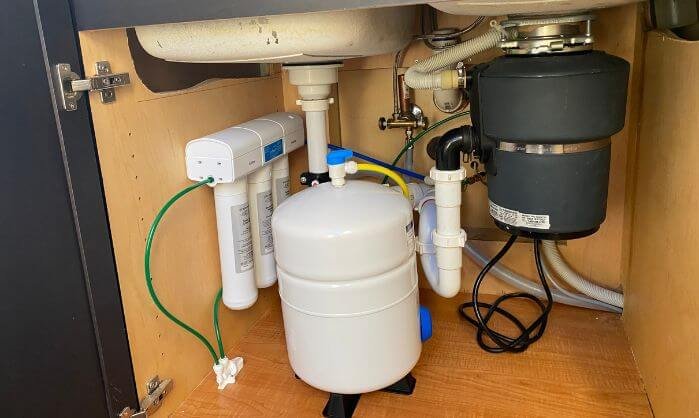
Modern equipment has evolved considerably, and advanced reverse osmosis technology can combine membranes with several supporting treatment stages. These may include sediment pre-filters, carbon filtration, post-treatment, storage, and monitoring features.
The membrane is still the heart of the process, but the surrounding components help protect it and improve the overall experience.
Why Multiple Stages Can Matter
It might seem strange to run water through several filters before it reaches the faucet. In practice, each stage can have a different purpose.
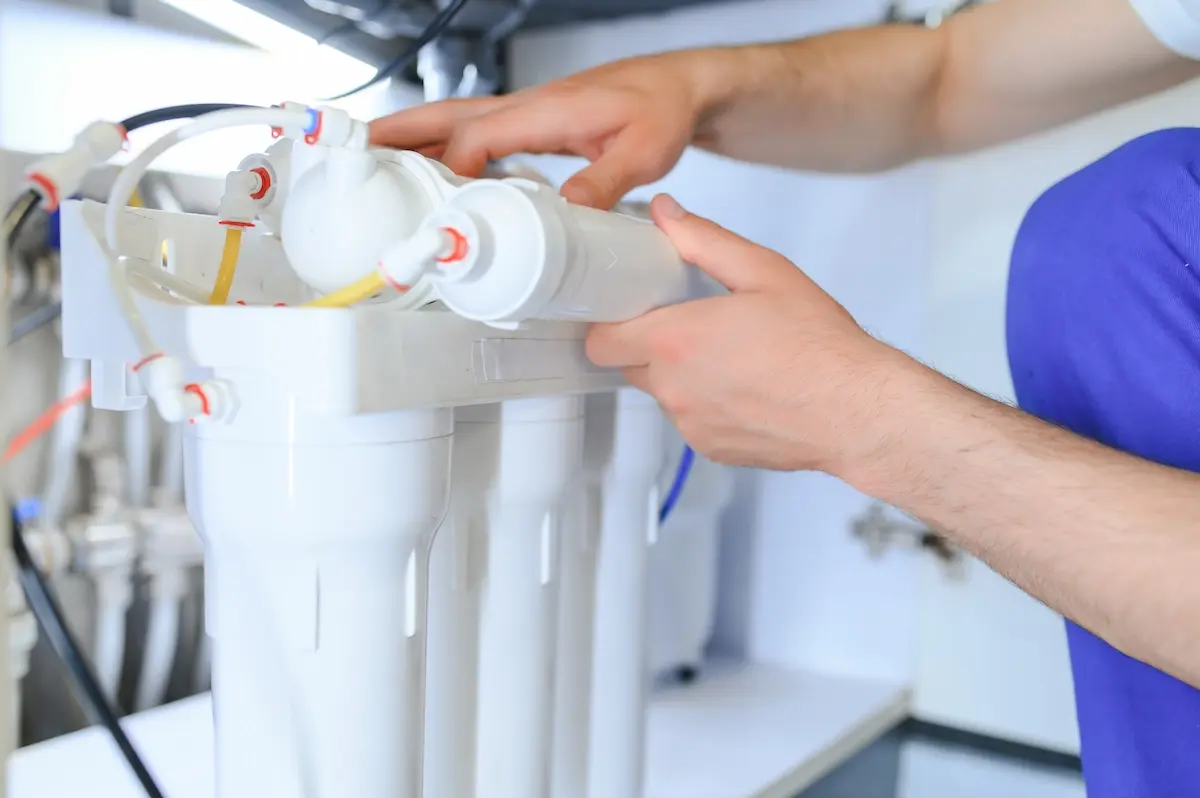
Sediment filtration can capture particles before they reach the membrane. Carbon filtration may reduce chlorine and certain compounds that could affect taste or damage some membrane materials. The reverse osmosis membrane then provides the primary dissolved-solids reduction.
A final polishing filter may be used to improve taste before the treated water reaches the drinking faucet.
This is where multi-stage reverse osmosis filtration systems can be useful. Rather than asking one component to do everything, the system divides the treatment work among several stages.
Of course, more stages aren’t automatically better. Each component adds cost and maintenance. What matters is whether each stage has a meaningful role based on the incoming water.
Start by Understanding the Water
One of the biggest mistakes homeowners make is choosing a treatment system before figuring out what they’re trying to treat.
drinking water contaminants can vary depending on the source, local conditions, plumbing, and other factors. Some concerns involve naturally occurring minerals, while others may be associated with agricultural, industrial, or municipal influences.
Water testing can help establish a baseline. Depending on the situation, testing might look at hardness, pH, iron, manganese, total dissolved solids, or specific contaminants.
If you’re concerned about something particular, don’t assume a general-purpose system will automatically remove it. Check the system’s specifications and performance claims carefully.
A little homework here can make the difference between useful treatment and an expensive appliance that doesn’t solve the problem.
Reverse Osmosis Isn’t a Whole-House Solution by Default
Most residential reverse osmosis systems are designed for point-of-use treatment, commonly at the kitchen sink.
That’s actually a practical arrangement for many homes. You may not need highly treated water for every shower, toilet flush, or load of laundry. Drinking and cooking water are often the areas where additional treatment matters most to the homeowner.
Whole-house water treatment can involve other technologies depending on the concern. For example, a water softener may be used for hardness, while sediment filtration can protect plumbing and appliances.
The goal is to avoid using an expensive treatment process where it isn’t necessary.
What Happens to the Water That Doesn’t Pass Through?
One detail about reverse osmosis sometimes surprises new users: the process produces a concentrated reject stream.
Not all water entering the membrane becomes treated drinking water. Some carries the concentrated dissolved material away from the membrane.
The amount of wastewater varies by system design and operating conditions. Newer equipment can be designed to improve efficiency, but it’s still worth asking about the system’s recovery rate before installation.
This is particularly relevant for households that are trying to conserve water or have concerns about drainage capacity.
Pressure Has a Bigger Role Than You Might Think
Reverse osmosis depends on pressure to move water through the membrane.
If household water pressure is too low, production can slow down considerably. You might notice that the storage tank takes longer to fill or that the treated-water flow feels weaker than expected.
A properly sized system should take the home’s pressure and water conditions into account.
In some situations, a booster pump may be appropriate. That’s not necessarily a sign that something is wrong; it simply means the system needs adequate operating pressure to work effectively.
Maintenance Isn’t Optional
The membrane and filters don’t last forever.
Pre-filters need replacement according to their service requirements. Carbon cartridges eventually reach capacity. The membrane itself has a finite service life, influenced by incoming water quality and operating conditions.
If maintenance is ignored, performance can decline gradually. Water production may slow, taste can change, and the system may no longer perform according to its original specifications.
The easiest approach is to keep a simple replacement schedule. Write the installation date on the filter housing or keep the information in your phone.
Five minutes of organization can prevent months of poor performance.
Don’t Ignore the Storage Tank and Faucet
People often focus so heavily on the membrane that they forget the rest of the system.
The storage tank, tubing, valves, fittings, and dedicated faucet all form part of the treatment setup. Sanitation and inspection may be needed periodically, depending on the system.
If treated water suddenly develops an unusual taste or odor, don’t automatically assume the membrane has failed. The post-filter, tank, tubing, or faucet could also deserve attention.
A systematic check is better than replacing expensive components at random.
Consider What You Actually Want From Your Water
Not everyone has the same expectations.
One homeowner may want water that tastes better. Another may be concerned about a specific dissolved contaminant. Someone else may simply prefer the consistency of treated water for coffee and cooking.
Those goals should influence the system you choose.
Reverse osmosis can be an excellent tool, but it shouldn’t be treated as a universal answer. Sometimes carbon filtration is enough. Sometimes a softener or another whole-home treatment is more important. And in some cases, a combination makes sense.
The water itself should guide the decision.
Installation Quality Matters
Even a good reverse osmosis system can perform poorly when installed incorrectly.
Connections need to be secure. Drain lines need to be configured correctly. Filters and membranes need to be installed in the right sequence. The system needs appropriate pressure and enough room for future maintenance.
Professional installation can also help identify plumbing limitations before they become problems.
If you’re installing the system yourself, follow the manufacturer’s instructions carefully and understand local plumbing requirements.
A Practical Approach to Better Drinking Water
Reverse osmosis has earned its popularity for a reason. It offers a way to reduce many dissolved substances from water used for drinking and cooking, and modern systems can be compact enough to fit comfortably beneath a kitchen sink.
But technology alone isn’t the answer.
Start with testing. Identify the actual water-quality concern. Compare treatment methods. Consider pressure, water efficiency, maintenance, and installation requirements. Then choose a system that fits your household rather than buying the most complicated option available.
Good water treatment doesn’t need to be flashy. Ideally, it works quietly in the background.
You turn on the kitchen faucet, fill your glass, make your coffee, and carry on with your day. That’s the real measure of a well-chosen system—not how impressive the equipment looks, but how naturally it fits into everyday life.