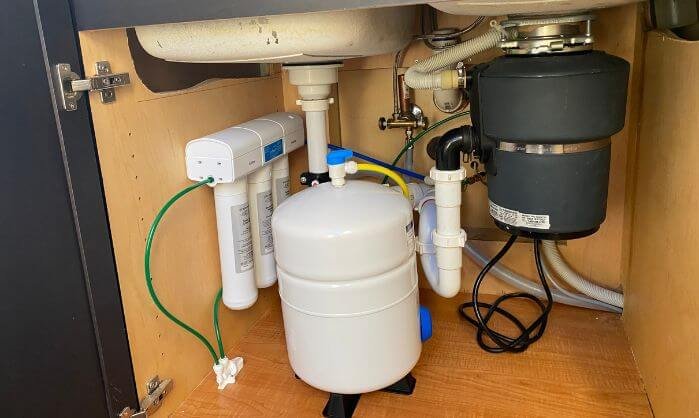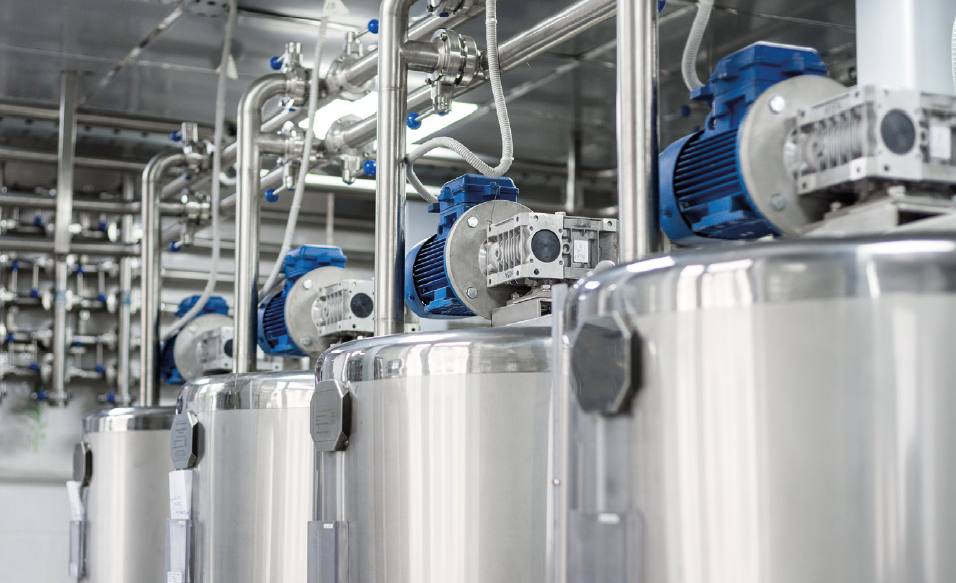
Water treatment equipment tends to disappear into the background once it’s installed. That’s probably a good thing. Nobody wants to spend their mornings checking tanks, valves and pipes before making coffee.
But behind a system that quietly does its job is a collection of design choices that matter. Capacity, controls, plumbing connections and maintenance features can all influence how well the equipment performs over the years.
It’s easy to focus on the headline features when shopping for a water treatment system. Bigger capacity sounds better. A built-in bypass sounds convenient. Automated metering sounds clever. Yet the real question isn’t whether a system has impressive features. It’s whether those features make sense for your home’s water, usage and daily routine.
A little understanding can help you make that distinction.
Capacity Should Match the Household
Every home has a different water demand.
A couple living in a small house may use considerably less water than a family of six. A household with several bathrooms can also experience short periods of very high demand, especially in the morning when showers, toilets, faucets and appliances may all be operating at once.
This is why high capacity equipment can be useful for certain homes. The phrase shouldn’t simply mean “bigger tank,” though. What matters is whether the system can deliver the required treatment performance while maintaining suitable flow during normal and peak usage.
An oversized system may cost more than necessary. An undersized one can struggle when demand rises.
Good sizing sits somewhere in between.
Flow Rate Deserves Attention
Water treatment systems need enough contact time with their treatment media to work properly, but they also need to accommodate the home’s plumbing demand.
If flow is too high for the equipment, performance can suffer. If the plumbing or valve is restrictive, household water pressure may be affected.
When comparing systems, ask about service flow rate and peak flow rate rather than looking only at tank dimensions or media volume.
This is especially important for larger families. A system that performs beautifully when one faucet is running may behave differently when several fixtures are being used simultaneously.
The numbers can sound technical, but they have a very practical meaning: will everyone still have the water they need when the house gets busy?
A Bypass Can Be Surprisingly Useful
A bypass valve might not be the most exciting feature on a specification sheet, but homeowners tend to appreciate it when maintenance time arrives.
An integrated bypass can allow water to bypass the treatment equipment when necessary, depending on the system design.
Why does that matter?
Imagine needing to service the unit while someone else needs water in the house. Or perhaps you’re performing maintenance and don’t want water flowing through the treatment media during the process.
A properly designed bypass can make these situations much easier to manage.
The key word is “properly.” The bypass needs to be accessible, clearly understood and installed according to the manufacturer’s instructions. Homeowners should know what position it should be in during normal operation and when it may be appropriate to use it.
Metered Systems Can Follow Real Water Use
Older treatment systems may rely on fixed schedules for certain maintenance cycles. Modern systems can be more responsive.
An internal metering system can measure water usage and use that information to determine when a treatment cycle is needed, depending on the equipment.
This can be useful because household water demand isn’t identical every day.
Maybe the family goes away for a weekend. Maybe relatives visit and water use suddenly increases. A system based only on a rigid schedule doesn’t necessarily know the difference.
Metered operation can provide a more usage-based approach, potentially helping avoid unnecessary cycles.
Still, automation should be viewed as a convenience, not a substitute for proper setup and maintenance.
Water Quality Comes Before Equipment
Before deciding how much capacity or which control features you need, understand the water you’re treating.
Hardness, iron, sediment, pH, chlorine, dissolved solids and other characteristics can all influence the appropriate treatment strategy.
A system designed primarily for hard water isn’t automatically the right solution for a water source with a different concern.
Testing can help establish a baseline. From there, a water professional can recommend equipment based on actual conditions rather than assumptions.
This is one of the most important steps in the entire process, and it’s often the one homeowners are tempted to skip because buying equipment feels more productive.
It isn’t.
Don’t Confuse More Features With Better Treatment
A system can have a sophisticated valve, digital controls and multiple operating modes and still be poorly suited to a particular home.
Features should support the treatment goal.
If a household needs better control over regeneration, metering may be useful. If maintenance access is a priority, an integrated bypass can help. If water demand is high, adequate capacity becomes especially important.
But none of those features can compensate for choosing the wrong treatment technology.
Think of it like buying a car. A vehicle can have an impressive dashboard, but if it isn’t the right size for your family or doesn’t suit the roads you drive, the extra features don’t solve the fundamental problem.
Water treatment works much the same way.
Installation Is Part of the System
Equipment specifications are only half the story.
Installation determines how the system interacts with your home’s plumbing. Pipe size, flow direction, drain connections, shutoff valves and available space all deserve consideration.
Accessibility matters too.
A treatment system should be positioned so filters, controls and service components can be reached without excessive effort. If the equipment is squeezed behind a water heater or buried under storage boxes, routine maintenance becomes harder than it needs to be.
Good installation is rarely flashy. It’s simply thoughtful.
Maintenance Shouldn’t Be an Afterthought
Even a well-designed system needs routine care.
Depending on the technology, that may include replacing filters, checking valves, replenishing supplies, cleaning components or inspecting connections.
Keep track of service intervals. Manufacturers provide maintenance recommendations for a reason, and following them can help preserve system performance.
It’s also worth keeping the equipment manual somewhere accessible. A digital copy on your phone works just fine. When a setting needs adjustment three years after installation, you’ll be glad you know where the information is.
Think About What Happens During a Power Outage
Some modern treatment equipment uses electronic controls or requires electricity for certain functions.
If your home experiences occasional outages, ask how the system behaves when power is interrupted.
Does it retain its settings? Does it require resetting? Will the household still receive water through a bypass? What happens if a scheduled cycle is interrupted?
These aren’t questions that come up during a normal sunny afternoon. They become much more interesting during a storm.
Knowing how your equipment responds ahead of time can prevent confusion later.
Compare Long-Term Operating Costs
Initial price is important, but don’t stop there.
Consider water consumption during regeneration or backwashing, replacement components, electricity requirements and routine service.
A system that costs slightly more upfront may prove economical over its operating life if it uses resources efficiently and has readily available replacement parts.
On the other hand, paying extra for features you don’t need isn’t necessarily a smart investment.
Look at the complete picture.
Good Design Is Quietly Practical
The best water treatment systems aren’t necessarily the ones with the longest specification sheets.
They’re the ones that fit the home.
Appropriate capacity. Sensible flow rates. Accessible controls. Convenient bypass operation. Reliable metering. Straightforward maintenance.
Those details may not make for a dramatic sales pitch, but they’re what homeowners live with after the installation crew leaves.
Before choosing equipment, understand your water quality, estimate your household demand and ask questions about how the system will operate day to day. Make sure the controls make sense and the equipment can be serviced without turning a simple task into a weekend project.
A well-designed treatment system should ultimately become almost invisible.
You turn on the faucet. The water flows. The equipment quietly does its work.
That’s the kind of technology most people actually want — not complicated for the sake of being complicated, but thoughtfully designed to make everyday life a little easier.