Water quality has a way of becoming noticeable at the most inconvenient times. You turn on the shower and see mineral spots on the glass. The laundry feels different after washing. The kitchen faucet develops a chalky ring, or the water has a taste that wasn’t there a few months ago.
None of these things necessarily means there’s a serious problem. Still, they’re useful signals that your home’s water deserves a closer look.
For homeowners, treating water throughout the property can sometimes make more sense than installing separate filters at individual faucets. A whole-home approach can address certain water-quality concerns as water enters the plumbing system, giving the household a consistent treatment strategy rather than a collection of disconnected fixes.
The key is choosing that strategy based on the actual water.
Start With a Water Test
Before purchasing any treatment equipment, understand what you’re dealing with.
Water testing can identify characteristics such as hardness, iron, sediment, pH and other potential concerns. The results provide a useful starting point for deciding whether you need softening, filtration, disinfection or another form of treatment.
This is especially important because two homes in the same general area can have different water conditions. Private wells may vary considerably from property to property, while municipal water can also interact differently with household plumbing.
Testing turns a vague complaint — “the water doesn’t seem right” — into something you can actually work with.
Why Lancaster Homes May Need Different Approaches
Local water conditions, the age of a property, plumbing materials and the water source can all influence what homeowners experience.
For households looking into whole home water treatment in Lancaster, PA, the first question shouldn’t be, “Which system is best?” It should be, “What does our water actually need?”
That distinction matters.
A home dealing primarily with hardness may benefit from a softener. Another property might have sediment or iron concerns. A household focused on drinking water may want additional filtration at the kitchen faucet, even if the rest of the home’s water is treated differently.
There isn’t one magic system that solves every situation.
What Whole-Home Treatment Can Address
A whole-home treatment setup can be designed to target specific characteristics of the incoming water.
For example, softening can reduce calcium and magnesium that contribute to scale. Filtration can remove sediment or improve certain taste and odor concerns. Specialized systems can address other water-quality characteristics identified through testing.
The benefit is consistency. Instead of treating water only at one sink, treatment can occur before water reaches showers, laundry appliances, faucets and other fixtures.
That doesn’t mean every home needs extensive equipment. In fact, adding unnecessary treatment can create more maintenance and expense than it’s worth.
Customization Is More Than a Sales Word
Homeowners often hear the word “customized” when shopping for water treatment, and sometimes it can sound like marketing language.
But genuine customization has a practical meaning.
Customized whole home water treatment solutions should take into account water chemistry, household size, daily water usage, plumbing configuration and the specific problems the homeowner wants to solve.
A family of six with several bathrooms has different water demands from a couple living in a smaller house. A private well may require a different treatment sequence from a municipal supply.
Even the same type of water problem can require different equipment depending on its severity.
Hard Water Is a Common Frustration
Hard water doesn’t usually announce itself dramatically. Instead, it leaves little reminders everywhere.
You might see white deposits around faucets, cloudy shower glass or spots on dishes. Soap may seem harder to rinse away, and scale can accumulate inside water heaters and appliances.
A properly sized softener can help reduce these mineral-related problems.
However, softening isn’t designed to remove every possible contaminant. If testing reveals iron, sediment or another concern, additional treatment may be appropriate.
This is another reason to test first rather than buying equipment based solely on a visible symptom.
Think About the Entire Household
One of the biggest advantages of whole-home treatment is that it considers water as a property-wide resource.
The water used for bathing, laundry and cleaning matters too. You don’t drink shower water, obviously, but your skin and hair still come into contact with it, and appliances depend on it every day.
If hardness is affecting the home, treating only drinking water won’t solve scale on the showerhead or inside the water heater.
On the other hand, if your only concern is drinking-water taste, a point-of-use system may be more economical than treating the entire property.
The right choice depends on the goal.
Residential Systems Should Fit Real Life
Good residential solutions should be convenient to own as well as effective at treating water.
That means homeowners should consider filter replacement, salt requirements, system size, maintenance schedules and available service before installation.
A treatment system that’s difficult to maintain may eventually be neglected, even if it was excellent on paper.
Ask practical questions. How often does the equipment need service? What parts will need replacement? How much space does the system require? What happens if something goes wrong?
The answers can be just as important as the treatment technology itself.
Don’t Forget About Drinking Water
Whole-home treatment and drinking-water filtration can complement one another.
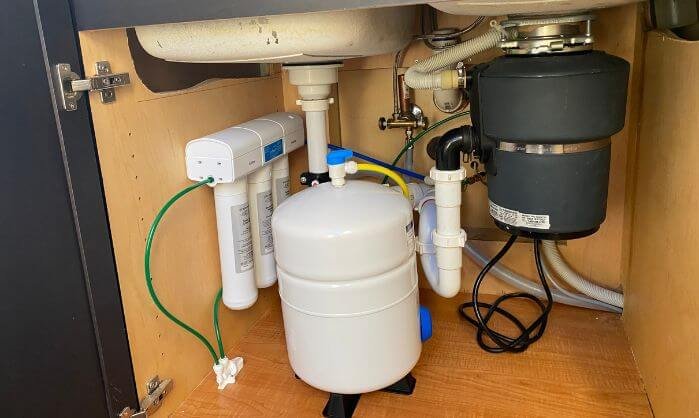
A household may use whole-home equipment to manage hardness or sediment while using a dedicated drinking-water system for additional filtration at the kitchen sink.
This approach can be useful when homeowners want targeted treatment for drinking and cooking without necessarily applying the same technology to every gallon used in the house.
Again, testing helps determine whether that additional step is necessary.
Maintenance Keeps the Investment Working
Water treatment equipment isn’t completely hands-off.
Filters need to be changed. Softener systems require appropriate salt levels and periodic service. Valves, tanks and other components may need inspection.
Homeowners should keep a simple record of service and replacement dates. It takes only a few minutes and can prevent the classic problem of realizing a filter is two years overdue when the water starts tasting strange.
Regular maintenance also helps identify small problems before they become larger ones.
A Better Water System Starts With Better Decisions
Whole-home treatment isn’t about making water complicated. In many cases, it’s actually about simplifying things.
Instead of dealing with separate problems at different faucets, homeowners can develop one clear strategy based on their water source and household needs.
The smartest approach is straightforward: test the water, understand the results, identify your priorities and choose equipment accordingly.
For Lancaster homeowners, that can mean fewer mineral deposits, better-performing appliances, more consistent water quality and less guesswork about what is happening inside the plumbing.
You don’t need the biggest system on the market. You need the right one for your home.
And when the treatment plan is properly selected, installed and maintained, good water becomes what it should have been all along — something you can use every day without giving it much thought.