Most water problems don’t arrive with a dramatic warning. There’s no alarm, no flashing red light above the kitchen faucet. Instead, you notice little things.
A glass has a faint metallic taste. White spots keep appearing around the sink. The showerhead seems to clog faster than it used to. Maybe the laundry comes out with an odd smell, or your morning coffee just doesn’t taste quite right anymore.
These everyday annoyances are easy to dismiss. After all, water is water, right?
Not always.
What homeowners casually call problem water can involve anything from excessive hardness and iron to sediment, unpleasant odors, or other characteristics that require specific treatment. The important thing is not to panic or immediately buy the first filter you see. Start by figuring out what has changed and why.
Pay Attention to the Clues Your Home Gives You
Your plumbing fixtures can tell you quite a bit.
Orange or reddish staining may point toward iron. Darker staining can sometimes be associated with manganese. A white, chalky coating often suggests hardness minerals. Cloudy water may indicate suspended particles, although appearance alone can’t tell you exactly what’s happening.
Taste and odor are clues, too.
A chlorine-like smell can be noticeable in some treated municipal supplies. Sulfur-related compounds may create a rotten-egg odor in certain well-water situations. Metallic or earthy flavors can have several possible causes.
None of these symptoms provides a complete diagnosis, but they are worth paying attention to.
Think of them as your home’s way of saying, “Hey, something’s different.”
Don’t Guess What Is in Your Water
One of the easiest mistakes is choosing a treatment system based entirely on a visible symptom.
For example, seeing scale around a faucet may make you assume you need a softener. Sometimes that’s true. But if the water also contains sediment or iron, softening alone won’t necessarily solve everything.
A water test gives you much better information.
Testing can help identify characteristics such as hardness, pH, iron, manganese, dissolved solids, and other water-quality indicators. For private wells, testing may be particularly important because groundwater conditions can vary substantially from property to property.
Instead of treating a guess, you can treat an actual problem.
That’s a much better way to spend money.
Not Every Water Problem Needs the Same Solution
Water treatment isn’t a one-filter-fits-all situation.
Sediment filtration is generally intended for particles. Carbon filtration can be useful for certain taste and odor concerns. Water softeners are designed primarily to reduce hardness minerals. Reverse osmosis can provide more extensive treatment for many dissolved substances in drinking water.
The right technology depends on what the testing shows.
This is why a long list of features shouldn’t automatically impress you. A system can have five stages and still be poorly matched to your water.
The goal isn’t maximum equipment.
The goal is appropriate treatment.
When Professional Advice Becomes Valuable
Some water concerns are straightforward. Others aren’t.
If testing reveals multiple issues, if the water changes suddenly, or if you’re dealing with a private well, getting advice from water treatment professionals can save a lot of trial and error.
A knowledgeable professional can evaluate test results, explain which treatment technologies are appropriate, and help determine system capacity based on household demand.
They can also consider things homeowners sometimes overlook, such as water pressure, plumbing configuration, drainage requirements, installation space, and maintenance.
A good conversation shouldn’t feel like a sales pitch. You should be able to ask what a system removes, why it’s needed, how often it requires maintenance, and what the ongoing costs will be.
Clear answers are a good sign.
Hard Water Can Become a Household Headache
Hard water is one of the most common reasons homeowners investigate treatment.
Calcium and magnesium are naturally occurring minerals, but when their concentration is high enough, they can create scale throughout the plumbing system.
You may notice spots on glassware, buildup around faucets, soap that doesn’t rinse easily, or deposits on shower fixtures.
Over time, scale can become more than an appearance issue. It can interfere with the performance of water-using appliances and plumbing components.
A properly sized softener can help reduce hardness and make everyday cleaning less frustrating.
Still, hardness isn’t the only possible cause of mineral buildup, so testing should come first.
Iron Can Be Especially Annoying
Iron in water is another problem homeowners often notice through staining.
Orange or rust-colored marks may appear in sinks, tubs, toilets, and laundry. Once those stains become established, removing them can feel like a never-ending battle.
The treatment approach depends on the type and concentration of iron present.
Some forms can be removed through filtration or oxidation-based treatment, while others may behave differently. That’s why a professional evaluation can be useful when iron levels are significant or when several water problems occur together.
Throwing a generic cartridge at an iron problem isn’t always the answer.
Drinking Water Deserves Special Attention
Whole-house water treatment and drinking-water treatment don’t necessarily have to be the same thing.
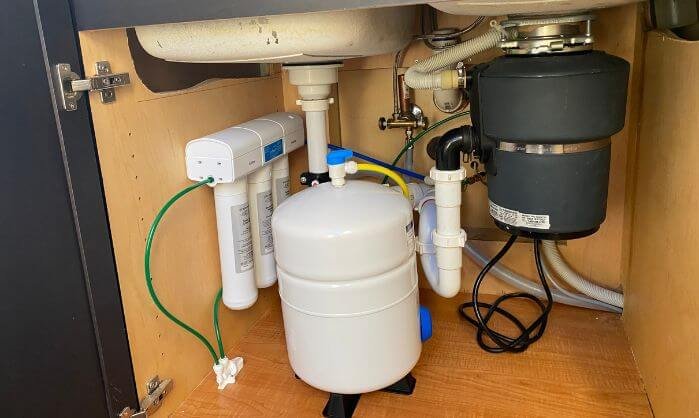
A household may want to reduce hardness throughout the plumbing while using a separate under-sink system for drinking and cooking water. Reverse osmosis, carbon filtration, and other point-of-use technologies can be selected based on the specific water-quality concerns identified through testing.
This approach can be practical because it treats drinking water more intensively without requiring every gallon entering the house to pass through the same process.
Again, there’s no universal solution.
Changes in Water Quality Shouldn’t Be Ignored
Sometimes the biggest clue is simply that something has changed.
If your water suddenly develops a new odor, unusual color, strange taste, or unexpected sediment, don’t automatically assume it’s harmless because everything was fine last year.
Changes in water quality can have different causes, including source conditions, plumbing work, equipment problems, or changes affecting a private well.
A new symptom deserves attention, especially if it persists.
Retesting can help determine whether the issue is temporary or represents a meaningful change that requires treatment.
Maintenance Is Part of the Treatment
Installing treatment equipment doesn’t mean you can forget about water quality forever.
Filters have service lives. Softening systems may require salt and periodic checks. Reverse osmosis membranes need replacement. Other treatment media may eventually become exhausted.
A system that’s overdue for maintenance may not perform as expected.
Keep a simple record of filter changes and service dates. If your water conditions change, don’t assume your existing equipment will automatically adapt.
Treatment is an ongoing process, not a one-time purchase.
Look Beyond the Initial Price
The cheapest system isn’t always the least expensive option over time.
Consider installation, replacement cartridges, service, electricity, salt, and other consumables. A system that costs slightly more initially may prove more practical if it lasts longer or is easier to maintain.
On the other hand, don’t pay for technology you don’t need.
The best investment is usually the system that addresses the identified water problem while fitting your household’s budget and maintenance expectations.
A Better Approach Starts With Curiosity
Water problems can be frustrating, especially when they seem to appear out of nowhere. But they don’t have to become an endless cycle of buying filters and hoping something works.
Look at the clues. Test the water. Understand the source. Then choose treatment based on evidence.
If the problem is complicated, get professional guidance rather than guessing.
Most importantly, remember that the goal isn’t simply to install a water treatment system. It’s to create water conditions that work better for your household—whether that means cleaner fixtures, better-tasting drinking water, fewer stains, or greater confidence in the water you use every day.
Once you understand what’s actually happening, the solution often becomes much simpler.
And that’s probably the best outcome of all: less scrubbing, less wondering, and a faucet you can turn on without giving it a second thought.